

Collagen Support
Why Skin Loses Firmness
Collagen is the structural scaffold that gives skin firmness, density, and mechanical support. In midlife, collagen loss accelerates as estrogen declines. Reviews of menopausal skin biology report that collagen content can fall rapidly after menopause, with roughly 30% lost in the first five years in some studies, followed by continued decline over subsequent years. As collagen and elastin support diminish, skin can look thinner, less springy, and more easily creased. This is one reason many women notice that their skin suddenly feels different—not just drier or duller, but less "held together."
Collagen support matters because the issue is not only chronological age; it is also what is happening in the dermal matrix. Hormonal change, oxidative stress, and cumulative UV exposure all contribute to breakdown of collagen and extracellular matrix proteins. That is why effective midlife skin strategy has to think beyond surface hydration alone. Hydration can make skin feel better quickly, but collagen-supportive care addresses the deeper architecture that influences firmness, texture, and resilience over time. This is the pillar concerned with helping skin maintain structure, not just softness.
Selected Scientific References
-
Farage MA et al. Intrinsic and extrinsic factors in skin ageing. Int J Cosmet Sci.
-
Zouboulis CC et al. The human sebaceous gland and acne pathophysiology. Dermatoendocrinology.
-
American Academy of Dermatology. Adult acne overview.
-
NIH research on estrogen decline and skin aging.
Disclaimer
The Intelligent Aging Protocol™ is an educational skincare framework informed by dermatologic research. It is not intended to replace medical evaluation or treatment by a qualified healthcare professional.
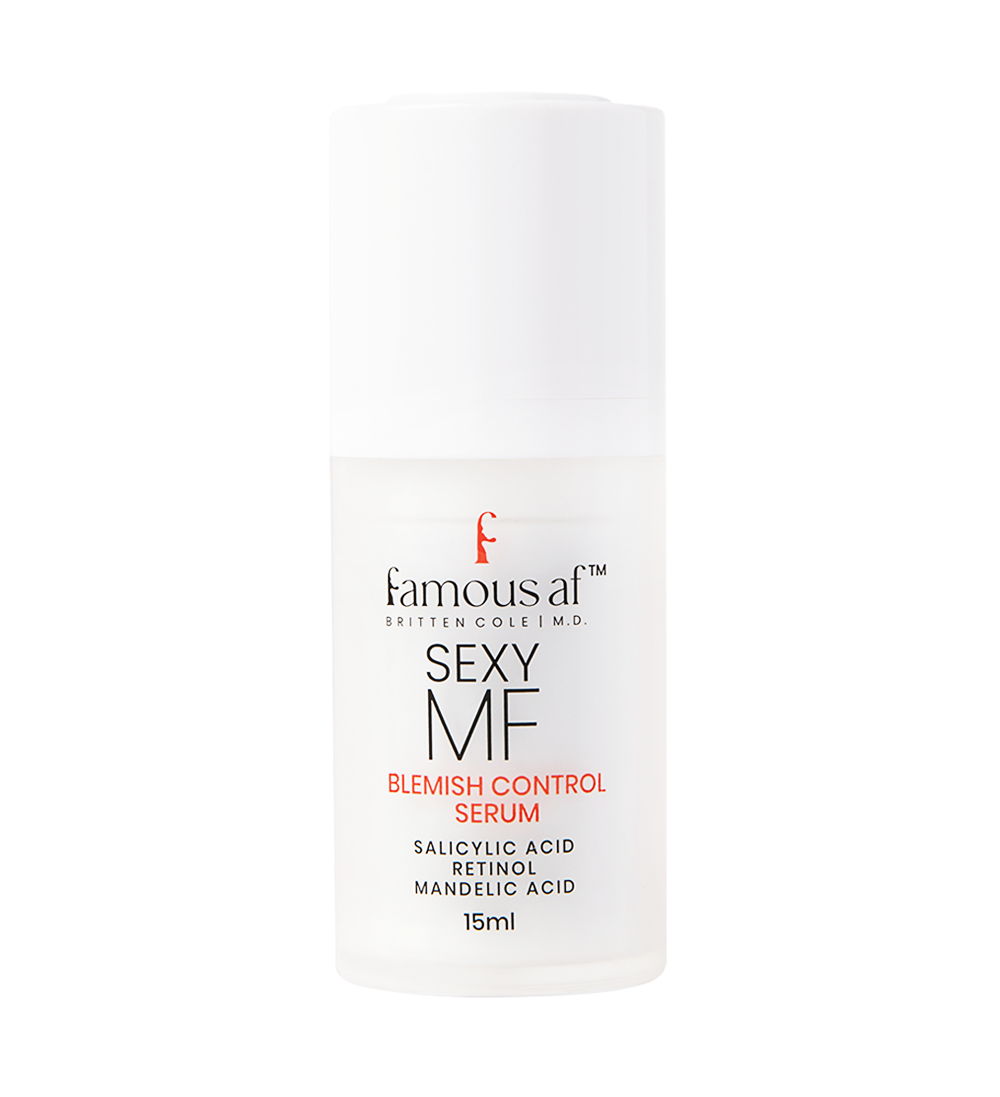
Midlife Breakouts Require a Different Strategy
Sexy MF - "Stabilize" Blemish Control Serum | Step 3: Intelligent Aging Protocol™
- Regular price
-
$75.00 - Regular price
-
- Sale price
-
$75.00
